Mister Pepper, my unexpected journey with a Chinese Pepper Tree
In 2023, my oldest son and I visited Japan, a trip filled with temples, peaceful gardens, and quiet corners lush with greenery. The harmony between nature and human care was something I couldn’t forget.
For my birthday the following year, my family surprised me with a Chinese pepper bonsai. It felt like a living postcard from that holiday: a small, elegant tree that captures the spirit of what I loved most about Japan: balance, beauty, and patience. Its glossy leaves shimmer under sunlight and give off a gentle citrusy scent when touched. It’s a joy to look at and care for, yet, as I’ve learned, owning a bonsai involves much more than admiration.
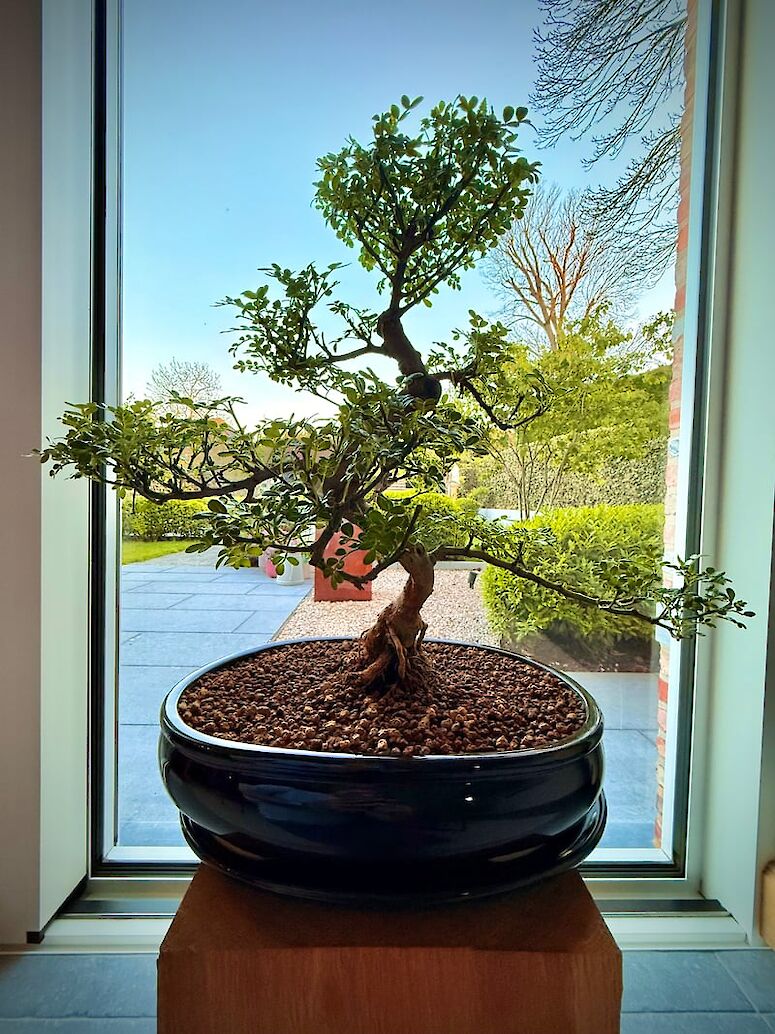
Caring for a bonsai is part science, part art. The Chinese pepper has a few quirks — it’s sensitive to water balance, light, and those unwelcome guests: tiny aphids and spider mites. I quickly realized bonsai maintenance requires regular attention, tiny scissors, and a steady hand. It’s not just pruning and watering; it’s learning to read subtle changes before they turn into problems. Even so, this care routine has a rhythm I’ve come to appreciate. Checking soil moisture, trimming soft shoots, or adjusting humidity feels meditative — almost like the stillness we found in those Japanese temple gardens.
My Chinese pepper bonsai has become more than a plant. It’s a link between that shared journey with my son, the thoughtfulness of my family, and the mindfulness that gardening teaches. Every new sprout feels like a quiet echo of that trip, proof that beautiful experiences can take root and keep growing long after we return home.